

















Problems with your internet service always seem to occur at the worst time. You're in the middle of call, nicely settled into a movie, or at a very delicate point in your video game.
The fact is, these types of network issues are intermittent meaning that the problem occurs sporadically. By the time you speak with tech support the problem is no longer occurring. You know it's going to happen again, and it's so frustrating that you can't seem to do anything abuot it.

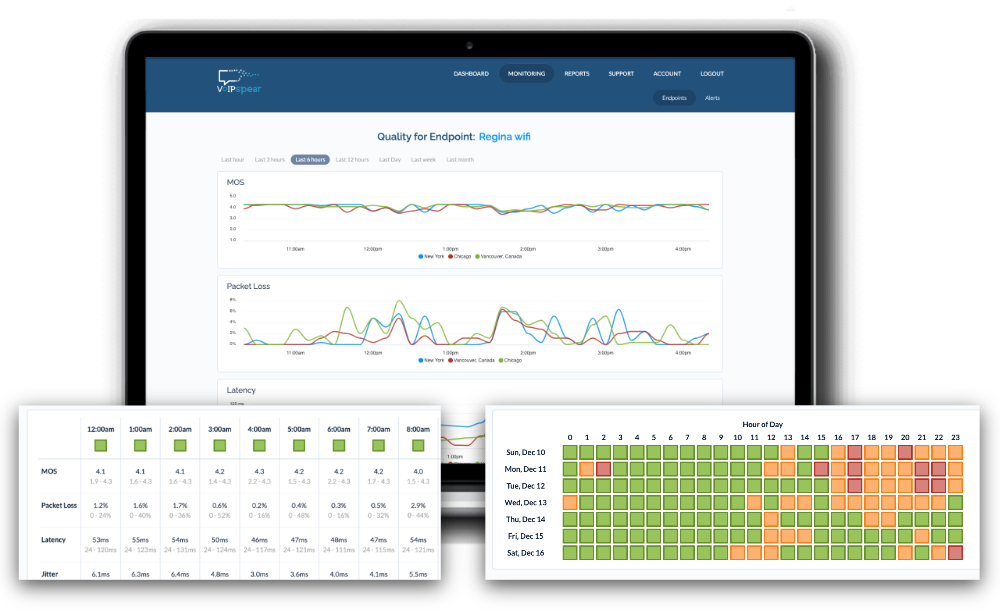
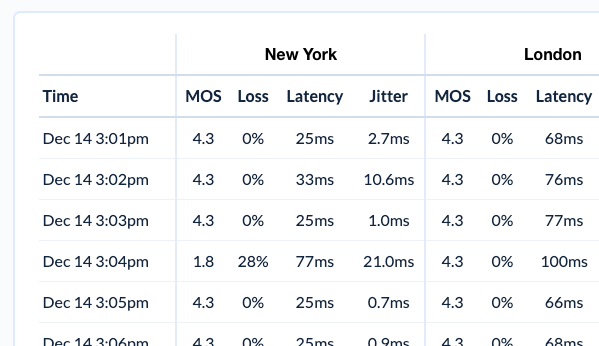
Bandwidth is plentiful these days. But the quality of your internet service is more important for real-time applications like voice, video, and gaming. VoIP Spear tracks packet loss, latency, and jitter. These are the characteristics of your internet connection that mean the difference between a smooth experience and frustration.
VoIP Spear monitors your internet service every minute of the day ... all day, every day. This means we can detect problems even when you're sleeping.
We designed VoIP Spear for ease of use. Most customers are up and running in minutes.
VoIP Spear uses an industry-standard metric for rating your network quality. We then display this in a simple chart. All you need is a quick glance at the charts to see when the problems occurred.
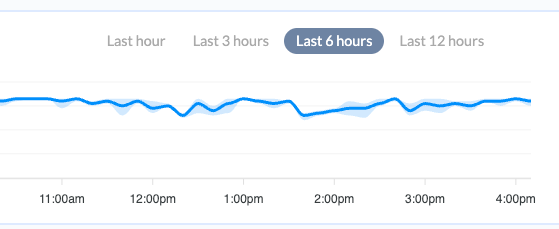
VoIP Spear has servers in more than 15 major cities across North America, South America, Europe, and the Asia/Pacific region. There's no better way to determine the quality of your internet service than by looking at the scores from multiple locations.

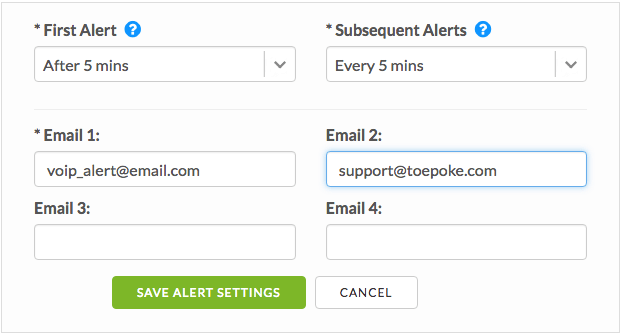
Set up VoIP Spear alerts and you'll be the first to know about your internet issues. Don't wait for complaints from the people using your network.
Customizable alerts give you complete control over who gets notified and how often.
Hundreds of companies trust VoIP Spear to monitor VoIP quality.